


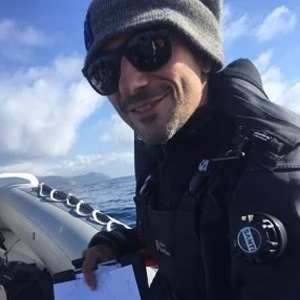
If you’re wondering how to become a dive instructor, you’ve probably already spent hours underwater and realized that the real magic is in passing that feeling on to others. Turning a passion for the sea into a profession is possible — and more structured than you might think. In this guide we’ll walk you through every step of the journey, from your very first certification to the moment you get to hand a new diver their card.
The path to becoming a certified scuba instructor is gradual. Each stage builds on the previous one, and every course you take deepens both your technical skills and your ability to teach them safely. Whether you follow the PADI or UTD training track, the core milestones are similar — and knowing them upfront makes the whole process far less daunting.
What does a dive instructor actually do?
Before diving into the requirements, it helps to understand what the job really looks like day to day. A dive instructor doesn’t just lead people underwater — they plan sessions, manage equipment, teach theory, conduct confined-water drills and supervise open-water dives, all while keeping students safe.
On top of the teaching itself, instructors often handle logistics at the dive center: filling tanks, checking gear, briefing groups and writing up paperwork after each certification. It’s a demanding role, but also one of the most rewarding jobs in the outdoor sports world. If you genuinely love both diving and people, it fits like a wetsuit.
Step 1 — Get your Open Water certification
Every instructor started exactly where you probably are right now: as a complete beginner. The Open Water Diver course is the internationally recognised entry-level certification that lets you dive independently to 18 metres. It combines theory, pool sessions and four open-water dives with a qualified instructor.
You need to be at least 10 years old, be comfortable in the water and be in good general health. No previous experience is required. Once certified, your Open Water card never expires — and it’s the foundational credential for everything that follows on the road to becoming a dive instructor.
From Open Water to Advanced: building your skills
After Open Water, the logical next step is the Advanced Open Water Diver course. Over five speciality dives — including deep diving and navigation — you push your ceiling down to 30 metres and start developing the situational awareness that instructors rely on every single day.
The Advanced course typically takes two to three days. It isn’t just about deeper water; it’s about becoming a more deliberate, self-aware diver. That quality of attention is exactly what your future students will be counting on you to model.
The Rescue Diver course: where it gets real
The Rescue Diver certification is often described as the most transformative course divers take before going pro. You learn to anticipate problems, manage tired or panicking divers at the surface and deal with underwater emergencies — skills that are a prerequisite for the Divemaster programme and non-negotiable for anyone who wants to teach.
Most people find Rescue Diver genuinely challenging, and that’s precisely the point. Working through simulated emergencies in real water builds the calm, methodical mindset that distinguishes a competent instructor from a merely experienced diver.
Step 2 — Become a Divemaster
The Divemaster rating is the first professional-level certification in both PADI and SSI programmes. It’s the gateway to assisting instructors with classes, leading certified divers on guided dives and taking on real responsibility for other people’s safety underwater.
To enrol in the Divemaster programme you typically need to have logged at least 40–60 dives (depending on the agency), hold a Rescue Diver certification and have current First Aid and CPR training. The course itself lasts around eight days in intensive format, though many candidates spread it over a longer period while continuing to dive.
What you learn as a Divemaster
During the programme you’ll work directly with an instructor to sharpen your dive skills to near-perfect execution — because you’ll soon be the person everyone is watching. You’ll also study dive physics, physiology, equipment maintenance and dive planning at a level well beyond recreational diver knowledge.
Equally important are the soft skills: how to brief a mixed-ability group, how to manage a diver who freezes on descent, how to communicate clearly underwater with hand signals and eye contact alone. These are the building blocks of effective teaching, and the Divemaster course lays them in.
Divemaster vs Assistant Instructor
Some agencies, including PADI, offer an intermediate step called Assistant Instructor (AI). Completing only the first part of the full Instructor Development Course qualifies you as an AI — you can assist with classes but can’t certify students independently. It’s a useful option if you want to get classroom and pool experience before committing to the full instructor track.
Step 3 — Enrol in the Instructor Development Course (IDC)
The IDC is the centrepiece of how to become a dive instructor. It’s divided into two components: the Assistant Instructor (AI) phase and the Open Water Scuba Instructor (OWSI) programme. Most candidates complete both in sequence and then sit the final Instructor Examination. To enrol you need at least 60 logged dives (100 are required by the time you take the exam), be at least 18 years old and hold current Emergency First Response (EFR) certification in CPR and First Aid.
The focus of the IDC isn’t dive skills — by this point yours should already be excellent. The focus is teaching: how to explain concepts clearly, how to run a classroom session, how to conduct in-water demonstrations and how to give feedback that actually helps students improve. It’s a training course for trainers, and it requires a genuine shift in mindset.
PADI IDC: structure and requirements
The PADI Instructor Development Course is the most widely recognised instructor training programme in the world, with IDC centres operating in virtually every country. The programme covers academic presentation skills, confined water teaching techniques and open water supervision, all evaluated against standardised PADI criteria.
Candidates who successfully complete the full PADI IDC sit the Instructor Examination (IE), conducted by independent PADI Examiners who assess candidates against the same objective criteria worldwide. Passing the IE earns you the Open Water Scuba Instructor (OWSI) rating — and from that point, you’re authorised to certify divers independently. You can read more about the full PADI instructor pathway on the official PADI professional diving page.
UTD IDC: the technical track
For those drawn to the DIR (Do It Right) philosophy and technical diving methodology, the UTD Instructor Development Course offers an alternative and complementary path. Prerequisites are higher: at least 200 logged dives, Divemaster certification from any recognised agency and completion of preparatory UTD courses.
The UTD IDC involves three to five days of intensive in-water work, developing the candidate’s ability to teach theory, conduct dry-land skill demonstrations and lead underwater training sessions according to UTD’s precision-focused standards. Graduates earn the UTD Scuba Diving Coach qualification. If you’re interested in exploring the UTD track specifically, you’ll find a detailed overview on the Argentario Divers page dedicated to the dive instructor course.
Step 4 — Pass the Instructor Examination
For PADI candidates, the Instructor Examination is the final gate. The IE lasts one to two days and is broken into academic presentations, confined water exercises and an open-water component. Examiners evaluate both knowledge and in-water performance against a fixed standard — there is no curve and no negotiation.
The best preparation for the IE is teaching as much as possible during your IDC, asking for honest feedback from your Course Director and reviewing your weak areas systematically. Most candidates who fail do so not because of poor diving but because they rush the presentation components or skip the theory revision.
- Academic component: written exam covering physics, physiology, equipment and dive planning.
- Confined water: skill demonstrations judged on execution quality and teaching clarity.
- Open water: supervised student management and briefing skills in real dive conditions.
- Standards review: knowledge of agency training standards and procedures.
Qualities that make a great instructor
Passing the IE makes you a certified dive instructor. Becoming a genuinely good one takes something more. The best instructors share a handful of traits that no certification can fully teach — but that you can consciously develop throughout your training.
Communication and patience
Teaching diving means explaining the same concepts dozens of times, to people with very different learning styles, in environments where your voice often doesn’t reach them at all. The ability to communicate clearly — on land, at the surface and through hand signals underwater — is arguably the single most important skill a dive instructor has.
Patience is equally essential. Not every student will be comfortable on their first descent. Some will need several sessions in confined water before they’re ready for open water. The instructor who can hold space for that process, without frustration, is the one students remember for life.
Situational awareness and calm under pressure
A dive instructor is always running two parallel processes: teaching the planned content and monitoring everything else — equipment, conditions, student behaviour, air consumption, time. Developing the ability to do both simultaneously takes experience, and it’s one of the reasons the Divemaster apprenticeship phase matters so much before the IDC.
The Rescue Diver training you completed earlier pays dividends here. Knowing that you can handle an emergency calmly doesn’t just make you safer — it changes the way you carry yourself in the water, and students pick up on it immediately.
A genuine passion for the underwater world
This one might seem obvious, but it’s worth saying explicitly: enthusiasm is contagious. Students who train with an instructor who visibly loves what they do tend to progress faster, feel more confident and stick with diving long after the course ends. Your passion for the sea is not a soft skill — it’s part of the product you’re delivering.
Career paths after becoming a dive instructor
Once you hold your instructor certification, the options are wider than most people expect. You can work at a dive center close to home, join a resort operation abroad, work on liveaboards, teach on cruise ships or build your own independent teaching practice. The PADI job board and equivalent platforms list positions in dozens of countries year-round.
Many instructors choose to specialise over time, adding Specialty Instructor ratings in areas like night diving, deep diving, sidemount or nitrox. An OWSI who earns five Specialty Instructor credentials and issues at least 25 certifications can apply for the Master Scuba Diver Trainer (MSDT) rating — a significant step up in both capability and marketability.
Growing through the instructor ranks
The most experienced and dedicated instructors can eventually pursue the Course Director pathway — the highest level of professional diving education. Course Directors are qualified to conduct IDCs and train future instructors, effectively multiplying their impact on the diving community.
It’s a long road from Open Water student to Course Director, but every step of it can be taken while working, travelling and doing the thing you love most. The career arc is genuinely unusual in that regard — few professions let you live out your passion so directly while building professional credentials.
The roadmap at a glance
The path to becoming a dive instructor follows a clear sequence, and each stage serves a real purpose in your development. Here’s the full progression in brief:
- Open Water Diver — entry-level certification, dives to 18m.
- Advanced Open Water Diver — 30m ceiling, five speciality dives.
- Rescue Diver — emergency management, prerequisite for Divemaster.
- Divemaster — first professional rating, assists instructors, leads guided dives.
- IDC (Instructor Development Course) — core instructor training, AI + OWSI components.
- Instructor Examination (IE) — independent evaluation, earns the OWSI credential.
- Specialty Instructor ratings — optional extensions, pathway to MSDT and Course Director.
Start your journey with Argentario Divers
Whether you’re taking your very first Open Water course or you’re already a Divemaster looking to move into teaching, the quality of the dive center you choose at each stage makes a real difference. Experienced instructors, well-maintained equipment and genuine investment in your progress aren’t details — they’re what the whole path is built on.
At Argentario Divers we offer a full range of PADI, SSI and UTD courses — from beginner level all the way to professional certification — in one of the most beautiful stretches of sea in Italy. If you’re serious about becoming a dive instructor, or even if you just want to take the first step and see where it leads, get in touch. We’ll help you figure out exactly where to start and how to get there.